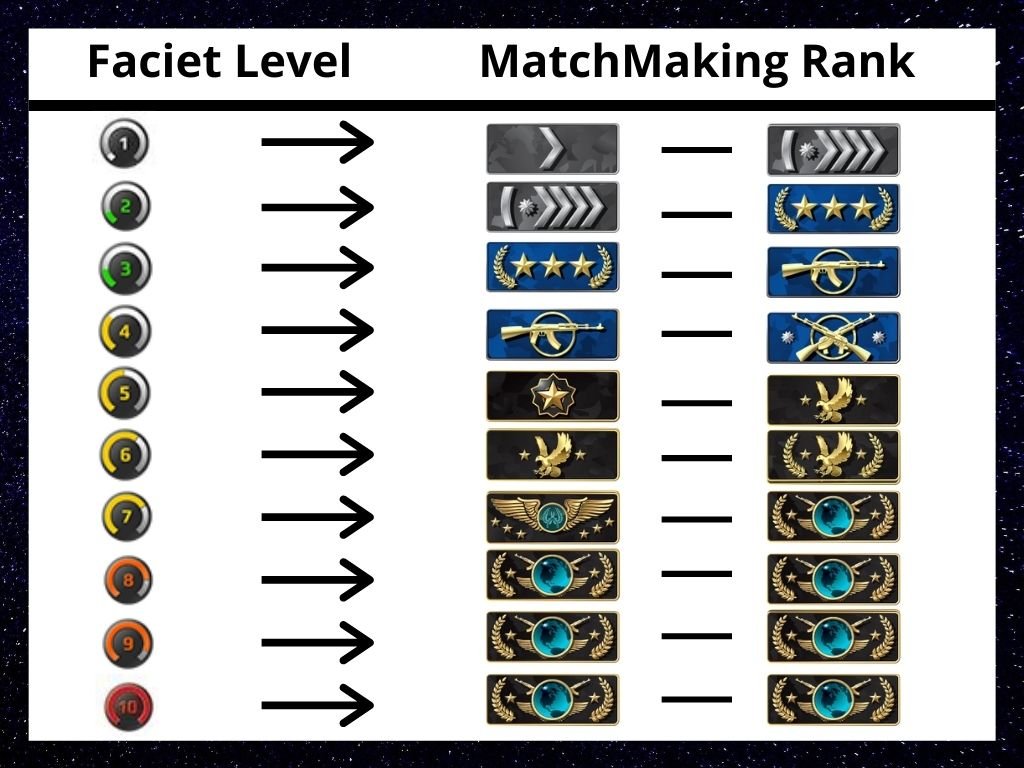
For any serious Counter-Strike 2 player, the quest for the ultimate competitive experience often boils down to a pivotal question: Which platform truly delivers? We're diving deep into CS2 Premier vs. Traditional Matchmaking vs. FACEIT: A Comparison to help you navigate the landscape and find your perfect arena. This isn't just about where you click "Play"; it's about the quality of competition, the integrity of your matches, and ultimately, how much fun you're having while climbing the ranks.
Whether you’re a fresh recruit aiming for your first competitive win or a seasoned veteran chasing the top 1%, understanding these distinct ecosystems is crucial. Each offers a unique blend of features, challenges, and communities. Let's break down the realities so you can make an informed choice that elevates your game.
At a Glance: Your Competitive Options
- CS2 Premier Mode: Valve's official, integrated competitive mode with a unique rating system and map veto. Requires Prime.
- Traditional Matchmaking: The classic CS2 competitive experience, where you pick specific maps and chase iconic ranks (Silver to Global Elite). Requires Prime.
- FACEIT: A renowned third-party platform offering superior anti-cheat, custom servers, and a granular ELO system, favored by aspiring pros. Free with premium upgrades.
The Foundation: What Each Platform Offers
Before we pit them against each other, let's establish a baseline understanding of what each platform brings to the table.
Traditional Matchmaking: The Old Guard
This is the standard competitive mode that carried over from CS:GO, distinct from the newer Premier Mode. Here, you select specific maps to queue for, working your way through the familiar ranks: Silver, Gold Nova, Master Guardian, Legendary Eagle, Supreme Master First Class, and Global Elite. It’s integrated directly into the game, requiring only Prime Status.
Best For: Casual competitive play, practicing specific maps not in the Premier rotation, or playing with friends without the intense pressure of other modes.
Premier Mode: Valve's Evolution of Competitive
Introduced in CS2, Premier Mode is Valve's refined take on competitive play, designed to be the definitive in-game experience. It's a more streamlined system where you veto maps in a pick/ban phase and compete for a numerical Premier Rating rather than traditional ranks. To access it, you need to reach Level 10 in CS2 and purchase Prime Status.
Best For: Players seeking a structured in-game competitive experience, those who appreciate the map veto system, and anyone looking for a more "official" Valve-backed ladder. If you're wondering how Premier stacks up against its predecessor, you might want to Explore CS:GO Premiers value compared to the traditional offerings.
FACEIT: The Third-Party Powerhouse
FACEIT is a dedicated third-party platform that hosts its own CS2 servers and competitive ladders. It's long been the go-to for players serious about improvement and competitive integrity, known for its robust anti-cheat and superior server infrastructure. While basic access is free, premium subscriptions unlock a host of additional features.
Best For: Aspiring professionals, dedicated players prioritizing fair play and high-quality servers, those who want advanced stats, and anyone looking for a truly hardcore competitive environment.
The Ranking Race: ELO, Scores, and Global Ambitions
How each platform tracks your progress and matches you with opponents is fundamental to the competitive experience.
Premier Mode's Dynamic Scoreboard
Premier Mode introduced a fresh take on ranking with its numerical Premier Rating, ranging from 1,000 to 30,000 and beyond, segmented into color-coded tiers. Instead of fixed ranks, you see your exact score, which provides a more granular sense of progression.
- System: A dynamic score from 1,000 to 30,000+.
- Progression: Winning earns you a significant boost (around +300 points), while losses are less punishing (roughly -100 points). This design makes climbing feel more achievable, even with occasional setbacks.
- Placement: You'll need 10 wins to receive your initial Premier Rating.
- Visibility: Features regional and global leaderboards, allowing you to see where you stand among the world's best.
- Match Format: All Premier matches are played in the MR12 format (Max Rounds 12, first to 13 wins).
While Premier aims to offer a compelling ranking system, some players find the points system a bit opaque compared to the direct ELO systems.
FACEIT's Precise ELO System
FACEIT built its reputation on a robust and precise ELO (Elo rating system) that tracks your skill level across 10 distinct levels. This system is highly sensitive to every win and loss, reflecting your performance with immediate feedback.
- System: A precise ELO system, ranging from Level 1 (100-500 ELO) to Level 10 (2000+ ELO).
- Placement: Most players start at Level 3 (750-900 ELO) or an ELO reflective of their Premier rating if they link their accounts.
- Progression: Wins and losses have a direct and often significant impact on your ELO, making every round count. The top 1,000 players globally can achieve the prestigious "Challenger" rank.
- Transparency: ELO is visible and universally understood, making it easy to gauge skill levels.
- Sensitivity: It's a highly sensitive system, meaning a losing streak can feel quite punishing, but a winning streak is equally rewarding.
The precision of FACEIT's ELO is a major draw for competitive players who crave an accurate reflection of their skill.
Traditional Matchmaking's Classic Ranks
Traditional Matchmaking still uses the familiar CS:GO rank system. You start unranked, win 10 matches, and get placed into a rank from Silver I to Global Elite.
- System: Ranks from Silver I to Global Elite, with various tiers in between.
- Progression: Wins increase your hidden ELO, losses decrease it. Rank ups/downs occur when your hidden ELO crosses certain thresholds. The exact ELO isn't visible.
- Placement: Requires 10 wins to receive your initial rank.
- Visibility: Ranks are visible in-game, but there are no integrated leaderboards like Premier or FACEIT.
This system is less transparent than Premier's score or FACEIT's ELO, often leading to "rank limbo" where players feel stuck despite performing well.
The War on Cheaters: Anti-Cheat Effectiveness
No competitive experience is good if it's plagued by cheaters. The effectiveness of anti-cheat systems is a major differentiator.
FACEIT's Ironclad Anti-Cheat
FACEIT is widely lauded for its proprietary anti-cheat system, which is considered one of the best in the industry. This client-side software runs in the background, actively monitoring for illicit programs and behaviors.
- Robustness: Significantly reduces the presence of cheaters, offering a much cleaner competitive environment.
- Proactive: Known for its proactive approach, often detecting new cheats quickly.
- Impact: This strict enforcement is a primary reason why many serious players migrate to FACEIT.
While no anti-cheat is 100% infallible, FACEIT's commitment to fair play is a significant draw.
Premier & Traditional Matchmaking's VAC
Valve Anti-Cheat (VAC) is the cornerstone of CS2's security. It's an effective system, but it operates differently from FACEIT's.
- Effectiveness: VAC does catch cheaters, often in waves, but it's generally considered less stringent and proactive than FACEIT's system.
- Concerns: Players in both Premier and Traditional Matchmaking occasionally report encountering cheaters, leading to concerns about competitive integrity.
- Trust Factor: Valve also employs a "Trust Factor" system, which attempts to match players with similar behavior patterns (e.g., reports, playtime, Steam account history) to reduce encounters with disruptive players or potential cheaters.
While VAC continues to evolve, the general sentiment is that if absolute anti-cheat superiority is your top priority, FACEIT holds an edge. For a deeper dive into the economics and player perception, you might want to check out the prevailing thoughts on CS:GO Premier's overall value and how it impacts the competitive landscape.
The Foundation: Server Quality and Performance
Lag, high ping, and server instability can ruin even the most perfectly executed strat. Server quality is often overlooked but profoundly impacts gameplay.
FACEIT's Premium Servers
FACEIT invests heavily in custom, dedicated servers that are renowned for their stability, low ping, and 128-tick rate (though CS2 servers are now 64-tick, FACEIT's infrastructure generally feels smoother).
- Stability: Offers consistent performance, minimizing lag spikes and connection issues.
- Ping: Often provides superior routing, resulting in lower ping, especially beneficial for players in remote regions or those with less-than-ideal internet connections.
- Impact: A smoother, more responsive gameplay experience is a hallmark of FACEIT matches.
For players where every millisecond counts, FACEIT's server quality is a major advantage.
Premier & Traditional Matchmaking Servers
Valve's official servers for both Premier and Traditional Matchmaking are generally good and have improved significantly over time.
- Quality: Good enough for most players, offering reliable performance in most regions.
- Consistency: While generally stable, they may not always match the consistent high standards of FACEIT's custom servers.
- Accessibility: Widely distributed, ensuring most players can find a server with reasonable ping.
While perfectly playable, some competitive players might notice a subtle difference in responsiveness compared to FACEIT. It's a key factor for those who consider all aspects of what makes a competitive experience truly worthwhile.
The Vibe: Community, Culture, and Player Experience
Beyond the technical specs, the human element of each platform — the community, the level of sportsmanship, and the overall "vibe" — dictates much of your experience.
FACEIT: Fierce, Dedicated, and Sometimes Intense
FACEIT attracts a highly dedicated and serious player base, often those with aspirations of going pro or simply striving for peak performance.
- Competitiveness: The environment is fiercely competitive, with players often taking matches very seriously.
- Community: Fosters a vibrant community with player hubs, teams, and regular community-driven tournaments, often with prizes.
- Learning Curve: Expect a steeper learning curve as teammates are generally less forgiving of mistakes.
- Toxicity: Can sometimes be prone to toxicity, particularly in lower ELO brackets, where frustration over perceived skill gaps can boil over. However, higher ELO games often see more respectful communication due to shared serious intent. Building a network of reliable players is almost a necessity.
If you thrive in high-stakes environments and are willing to engage with a demanding community, FACEIT can be incredibly rewarding.
Premier Mode: Growing Competition, Valve's Control
Premier Mode, being Valve's flagship competitive offering, aims for a balanced experience.
- Accessibility: Offers a more forgiving matchmaking experience, making it easier for newcomers to enter the competitive scene without being immediately overwhelmed.
- Competition: The level of competition is steadily growing, especially in higher Premier Ratings, as more serious players migrate here.
- Community Depth: Lacks the extensive community-driven events, leagues, and robust team-finding tools found on FACEIT.
- Toxicity: Can still experience toxicity, as is common in online games, but it generally feels less pervasive than the lower tiers of FACEIT. The "forgiving" nature of the rating system might contribute to a slightly less cutthroat atmosphere.
Premier strikes a balance, offering a serious but generally more accessible competitive environment directly within the game. It’s a good place to start figuring out if the competitive grind is for you, and to some extent, it addresses the perennial question of whether Valve's official competitive modes truly deliver value.
Traditional Matchmaking: Casual Competitive
Traditional Matchmaking often feels like the most relaxed of the three competitive options.
- Casual Vibe: Players here are often more laid-back, using it to practice, play with friends, or simply have fun without the pressure of Premier or FACEIT.
- Skill Spread: You'll encounter a wider skill range within ranks, and consistency can vary wildly.
- Toxicity: Can be present, but often feels less intense due to the lower stakes.
This mode is ideal for those who want competitive rules without the intense commitment or performance anxiety.
Feature Set and Flexibility: Beyond the Match
What else do you get besides the core gameplay? These platforms offer additional tools and options.
FACEIT's Advanced Toolkit
FACEIT is packed with features, many of which are exclusive to its premium subscribers.
- In-Depth Statistics: Provides comprehensive statistics on your performance, including K/D, headshot percentage, clutch success, map win rates, and more. This data is invaluable for self-improvement.
- Game Modes: Offers various game modes beyond standard competitive, including unranked, specific map queues, and hub matches.
- Platform Integrations: Easy to form teams, join hubs, and participate in ladders and tournaments.
- Premium Perks: Subscribers get priority queuing, map removal capabilities in veto, and access to exclusive tournaments and prizes.
FACEIT's feature set is designed for the serious competitor who wants every possible tool to analyze and improve their game.
Premier Mode's Seamless Integration
Premier Mode shines in its seamless integration directly within the CS2 game client.
- User Experience: No third-party clients, no extra logins – it's all there, built into the game you're already playing.
- Map Veto: Features a unique map pick/ban system where each team member gets a vote for maps and sides, adding a strategic layer before the game even begins.
- Game Updates: Benefits directly and immediately from all game updates and changes, always running on the latest official version.
- Simplicity: A simpler feature set compared to FACEIT, focusing purely on the competitive match itself.
Premier's strength lies in its convenience and direct connection to the core CS2 experience.
Traditional Matchmaking's Simplicity
Traditional Matchmaking is the most straightforward, offering very few additional features.
- Map Selection: You can choose specific maps to queue for, allowing you to practice or play your favorites.
- No Veto: No map veto system; you simply queue for what you want.
- Basic Stats: Provides basic end-of-match stats, but nothing as in-depth as FACEIT.
It's a "what you see is what you get" kind of mode, focused entirely on getting you into a game quickly.
The Cost of Entry: Free vs. Prime vs. Subscription
Your wallet might also have a say in your competitive journey.
FACEIT's Freemium Model
- Basic Access: Free. You can play competitive matches, earn ELO, and participate in many community events without spending a dime.
- Premium Subscriptions: Unlock significant features like priority queueing (shorter wait times), advanced statistics, ability to remove maps during veto, and access to premium-only ladders and tournaments with better prizes. Subscriptions typically range from $6-$10/month.
FACEIT offers a robust experience for free players but truly shines for those willing to invest in a subscription.
Premier & Traditional Matchmaking: Prime Status
Both Premier and Traditional Matchmaking require Prime Status, which is a one-time purchase.
- Cost: A one-time payment of $14.99 USD.
- Benefits: Grants access to all competitive modes (including Premier and Traditional Matchmaking), Prime-exclusive item drops, and a generally better matchmaking experience due to Trust Factor advantages.
- Ongoing Cost: No monthly subscriptions are required after the initial Prime purchase.
For a fixed, one-time fee, you get unlimited access to Valve's official competitive offerings. This makes it a cost-effective choice for many players who are considering the best long-term value in CS2 competitive play.
Your Competitive Compass: Which Path to Choose?
Deciding where to invest your time and energy comes down to your priorities, skill level, and what you seek from a competitive game.
Choose FACEIT If...
- You're serious about improvement: You want to compete at the highest levels, learn from every match, and truly hone your skills.
- You demand robust anti-cheat: You prioritize fair play and want to minimize encounters with cheaters.
- Server quality is paramount: You need stable, low-ping servers for optimal performance.
- Advanced features appeal to you: In-depth statistics, detailed match analysis, and exclusive game modes are important for your journey.
- You're comfortable with intensity: You can handle a highly competitive, potentially intense (and sometimes toxic) environment.
- Community tournaments excite you: You want to participate in leagues and events beyond regular matchmaking.
- You're willing to invest: You might consider a premium subscription to unlock the full platform potential.
Choose Premier Mode If...
- You prefer seamless integration: You want a competitive experience built directly into CS2 without third-party platforms.
- You value cost-effectiveness: A one-time Prime purchase suits your budget better than recurring subscriptions.
- You're newer to competitive: You're looking for a more accessible and potentially more forgiving entry point into serious play.
- You appreciate the map veto system: The strategic element of picking and banning maps before the match appeals to you.
- You want to climb Valve's official ladder: Competing on global and regional leaderboards within the game is your goal.
- You want to experience Valve's vision: You're keen on how Valve is shaping the future of competitive CS2.
Choose Traditional Matchmaking If...
- You seek casual competitive fun: You want to play competitive rules without the intense pressure of Premier or FACEIT.
- You want to practice specific maps: You need to queue for maps not currently in the Premier rotation.
- You prefer the classic rank system: The familiar Silver to Global Elite ranks are more appealing to you.
- You play primarily with a casual group of friends: It's the easiest way to hop into a ranked game together without complex third-party setups.
A Universal Competitive Tip: Build Your Network
Regardless of the platform you choose, one piece of advice consistently holds true for enhancing your competitive experience: endeavor to team up with reliable players or build a network rather than consistently solo queueing. This minimizes the chance of running into problematic teammates, improves communication, and ultimately makes the competitive grind more enjoyable and productive. Playing with a consistent stack significantly reduces frustration and can be the biggest factor in your climb.
Beyond the Choice: Your Journey
Ultimately, the best competitive platform for you in CS2 is the one that aligns with your goals, preferences, and how seriously you take the game. Each offers a distinct flavor of competitive Counter-Strike 2. Some players even juggle between them, using Premier for casual ranked fun and FACEIT for their most serious grind sessions.
There's no single "right" answer, only the right answer for you. Now that you understand the nuances of CS2 Premier, Traditional Matchmaking, and FACEIT, you're equipped to make that choice and embark on your journey to competitive glory. Good luck, and have fun out there!